24.09.2026, 7 pm
Collaborative Assemblages / Berlin
MONIKA FUNKE STERN
PROJEKTGRUPPE AMA-ZONE
In this edition of Collaborative Assemblages, we take a look at Berlin. In the 1980s, a women’s initiative was set up at the University of the Arts (now the UdK). Monika Funke Stern, a filmmaker and lecturer at the HDK at the time, played an active role in this initiative. She felt it was important for her students to become familiar with films by female filmmakers, and she also encouraged them to pick up a camera and start filming themselves. One result of these efforts was the AMA Zone film project, in which students were tasked with conceiving and producing an episode of a collaborative film. This evening is all about collaborative film projects.
PROGRAMME
Monika Funke Stern, Netze [Nets], 1978, 16 mm (digitised), 7 mins
Monika Funke Stern, Unding Undine [Absurdity Undine], 1981, 16 mm (digitised), 15 mins
Excerpts from the AMA Zones project:
Roswitha Baumeister, AMA Zone 2, 1982, Super 8 (digitised), 10 mins
Julia von Randow, Dagmar Schuricht, AMA Zone 3, Super 8 (digitised), 13 mins
Monika Funke Stern, Im Ernstfall nicht verfügbar [Not available in an emergency], 1983, 16 mm (digitised), 15 mins
Guests: Roswitha Baumeister, Monika Funke Stern, Julia von Randow
The discussion will be held in German, films with English subtitles
Venue:
Künstlerhaus Bethanien
Entrance: Regina-Jonas-Strasse 41-43
10999 Berlin
Collaborative Assemblages is a four-part series of experimental film screenings that explores various facets of feminist, collaborative working methods in the 1970s and 1980s—working methods that were of vital importance to women* active in experimental film. The episodes focus on experimental film scenes in Vienna, Hamburg and Berlin.
Collaborative Assemblages delves into the networks of practices that enabled women* to appear with greater self-confidence, greater expertise and, most importantly, in ever-increasing numbers within the experimental film scenes of the 1980s. It centres on various initiatives, collectives, and both official and unofficial groups. Exchanging knowledge about technology, filmmaking methods, and aesthetic forms, as well as sharing access to equipment, were key concerns within these assemblages. However, it was also about motivating one another and assisting with filming. The initiatives also provided a platform for (queer)feminist activism and self-determined cultural production.
These collaborative assemblages, often characterised by a spirit of friendship, did not adopt a uniform shape and were organised to varying degrees. They took various guises, such as self-made guidebooks on how to use a particular camera, the sharing of equipment, supportive discussions, and joint film projects or workshops. In their unformed state, they had the effect of deconstructing the experimental film scene and opening up new spaces for women* to become involved. The individual assemblages had varying lifespans, and only a few documented their own activities. For the most part, knowledge of them has been passed down only orally by contemporary witnesses, which highlights the fragility of this information.
A selection of experimental films and videos created within such assemblages will be presented across four screenings. The examples come from Vienna, Hamburg and Berlin. Each evening will be dedicated to one city and will feature discussions with filmmakers.
The series is a collaboration between Künstlerhaus Bethanien and attaque[e]r le visible, curated by Lawinia Rate.
The last event in the series:
22.10.2026, 7 pm
Collaborative Assemblages / Berlin II
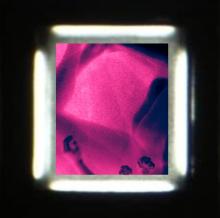
Image: Monika Funke Stern, Unding Undine, 1981, 15 mins (film still), © Monika Funke Stern