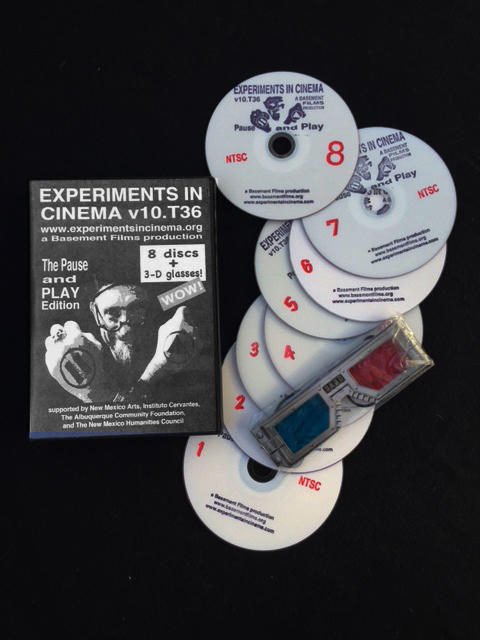
Experiments in Cinema v10 DVD Collection
8-DVD compilation celebrating Experiments in Cinema festival's 10th anniversary.
DISC 1
8-DVD compilation celebrating Experiments in Cinema festival's 10th anniversary.
DISC 1
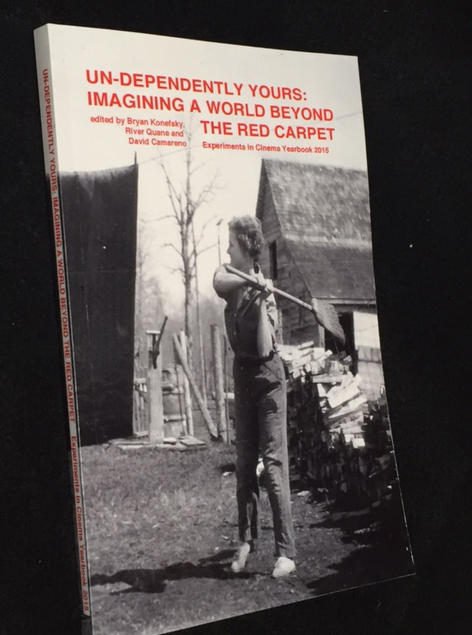
Film festivals have had varied and complex histories starting with Benito Mussolini's invention of the form in Venice in 1932. Since then (and too often) festivals are thought of in terms of Hollywood's film industry. This text is a celebration of all things un-dependently cinematic. The essays contained in this volume explore the cultural value of alternative film festivals from a wide range of perspectives and experiences.
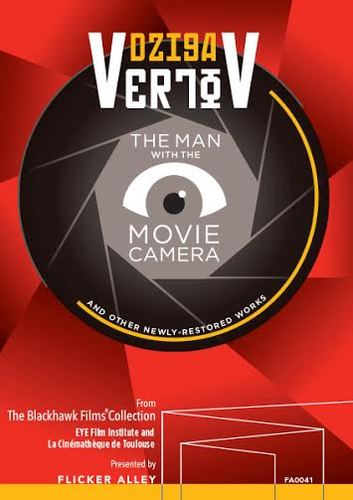
"I am an eye. A mechanical eye. I am the machine that reveals the world to you as only the machine can see it.” - Dziga Vertov ("Kino-Eye")
Reference work devoted to the avant-garde filmmaker, emblematic figure of the British experimental cinema, with twenty texts by Malcolm Le Grice and new essays by Yann Beauvais and Philippe Langlois on his film and its relationship with art and music.
Published following the eponymous exhibition at the Espace multimédia Gantner, Bourogne in 2011-2012
An extensive overview of the oeuvre of one of the masters of experimental cinema, including a complete chronology of the cineast's work and life as well as newly commissioned contributions by Andrea Bellini, Ken Eisenstein, John Hanhardt, and a visual essay by the artist.
Published on the occasion of the eponymous exhibition at the Centre d'Art Contemporain Genève from January to April 2015.
This comprehensive historical account demonstrates the rich diversity in 1970s British experimental filmmaking. It acts as a form of reclamation by integrating films having received inadequate historical and critical recognition and placing these alongside films existing as accepted texts of the decade. This history challenges the problematic 'return to image' thesis, providing examples of written evidence and demonstrating how this has problematically perpetuated a flawed account of the decade. This is the first extensive overview of 1970s filmmaking, contextualizing films within broader aesthetic, theoretical and socio-political frameworks. The detailed textual and comparative analyses offer unique approaches to individual films, shedding light on technical, aesthetic and economic decisions informing filmmaking. As such, it provides a unique understanding of how experimental filmmaking grew from a small handful of films and filmmakers, at the start of the 1970s, to a veritable 'explosion' in filmmaking by the end of the decade.
Over the past twenty years, Bill Morrison has built a filmography of more than thirty striking and original works which have been presented in cinemas, museums, galleries and concert halls worldwide. Making use of rare archival footage, which has often been decayed by the passing of time, Morrison explores the power of film as a medium which is evocative of memory and gives rise to a sense of collective mythology. Morrison's exquisite and timeless films are scored by the cream of the US underground / avant-garde music scene, including Dave Douglas, Henryk Górecki and Bill Frisell.
The Lettrist movement is unique in the history of avant-garde formations. Founded by Isidore Isou in Paris immediately after World War II, it remains active to this day, having lost none of its radicalism, either aesthetic or ethical. In this book, Nicole Brenez presents the key figures and the basic concepts of Lettrist cinema, the art form within which their formal innovations proved the most far-reaching, prefiguring the breakthroughs of the nouvelle vague and the experiments of expanded cinema.
This 3-volume set brings together for the first time the complete film works of Jack Chambers (1931-78), largely regarded as one of Canada’s most important visual artists. With a well-established career as a painter, he embarked on a short-lived but significant career as a filmmaker in the mid-1960s. Chambers’ artistic practice was described as “perceptual realism” and stood in counterpoint to the dominant abstract styles of his day. He completed five films in his lifetime.
|
Please notice that our website is not a shop. The items listed here are just for reference. Links will be provided when the publication is not generally available via standard retailers. |