Lo más valorado
Publicaciones más valoradas según las votaciones de los usuarios de la página.
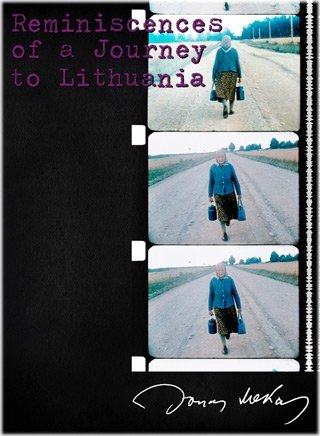
Jonas Mekas - Reminiscences of a journey to Lithuania
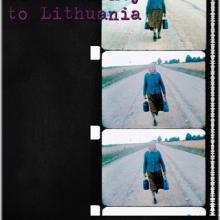
After a twenty-seven year absence, Adolfas and his brother Jonas returned to their birthplace in Lithuania. They had left Lithuania as young men, destined for a German labor camp. Now they came home for a visit, Adolfas with his wife, the singer Pola Chapelle.
Precio:
19,90 EURCategoría:
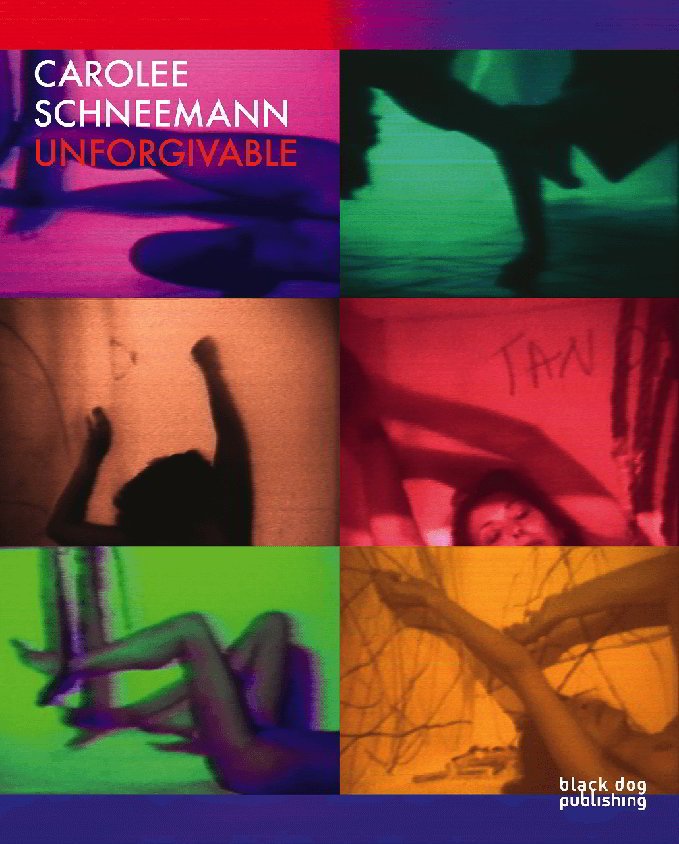
Carolee Schneemann: Unforgivable
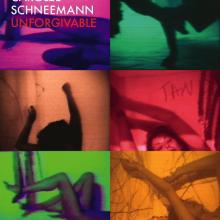
The most thorough visual overview of the work of groundbreaking and celebrated feminist artist Carolee Schneemann. Her prestigious career spans seven decades and encompasses the diverse artistic media of painting, sculpture, performance, film and video.
Precio:
59,95 USDCategoría:
Robert Beavers
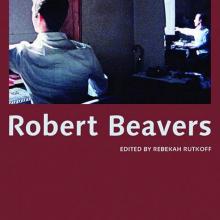
In a career spanning five decades, Robert Beavers has distinguished himself as one of the most important American avant-garde filmmakers. From My Hand Outstretched to the Winged Distance and Sightless Measure, his cycle of 18 films made across Europe since 1967, to Pitcher of Colored Light (2007) and The Suppliant (2010), intimate portraits shot in the U.S., Beavers has produced a deeply original film language framed by his use of colored filters and mattes.
Precio:
29,90 USDCategoría:
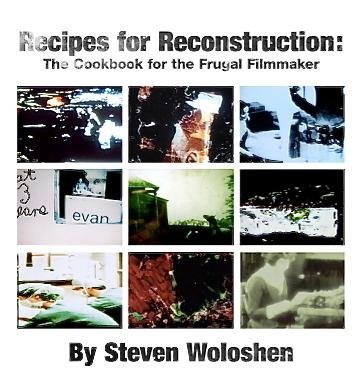
Recipes For Reconstruction

Veteran animator and filmmaker, Steven Woloshen introduces a variety of simple artistic strategies to create decay and to re-assemble damaged film prints into new experimental visions. This book includes a special DVD with nine short films created especially for this do-it-yourself “hands on” manual.
Precio:
40 CANCategoría:
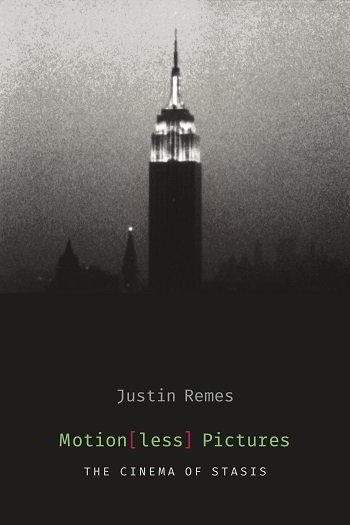
Motion(less) Pictures: The Cinema of Stasis

Conducting the first comprehensive study of films that do not move, Justin Remes challenges the primacy of motion in cinema and tests the theoretical limits of film aesthetics and representation. Reading experimental films such as Andy Warhol's Empire (1964), the Fluxus work Disappearing Music for Face (1965), Michael Snow's So Is This (1982), and Derek Jarman's Blue (1993), he shows how motionless films defiantly showcase the static while collapsing the boundaries between cinema, photography, painting, and literature.
Precio:
27 USDCategoría:
Jenni Olson - The Royal Road
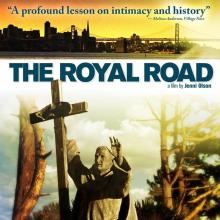
A cinematic essay set against a contemplative backdrop of 16mm urban California landscapes, The Royal Road offers up intimate reflections on nostalgia, the pursuit of unavailable women, butch identity and Alfred Hitchcock's Vertigo alongside a primer on Junipero Serra's Spanish colonization of California and the Mexican American War. Featuring a voiceover cameo by Tony Kushner.
Precio:
DVD - 24,95 USDStreaming - 3,99 USDDownload - 9,99 USDCategoría:
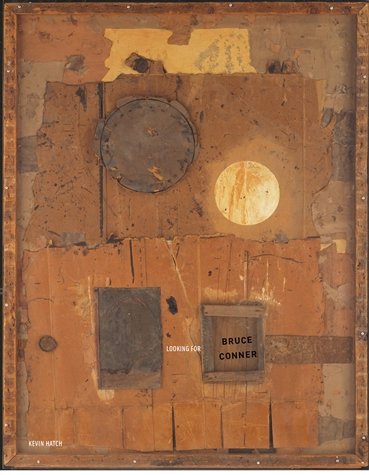
Looking for Bruce Conner

In a career that spanned five decades, most of them spent in San Francisco, Bruce Conner (1933–2008) produced a unique body of work that refused to be contained by medium or style. Whether making found-footage films, hallucinatory ink-blot graphics, enigmatic collages, or assemblages from castoffs, Conner took up genres as quickly as he abandoned them. His movements within San Francisco’s counter-cultural scenes were similarly free-wheeling; at home in beat poetry, punk music, and underground film circles, he never completely belonged to any of them. Bruce Conner belonged to Bruce Conner. Twice he announced his own death; during the last years of his life he produced a series of pseudonymous works after announcing his “retirement.” In this first book-length study of Conner’s enormously influential but insufficiently understood career, Kevin Hatch explores Conner’s work as well as his position on the geographical, cultural, and critical margins.
Precio:
29.95 USDCategoría:
Maya Deren. Incomplete Control

Maya Deren (1917-1961) was a Russian-born American filmmaker, theorist, poet, and photographer working at the forefront of the American avant-garde in the 1940s and 1950s. Influenced by Jean Cocteau and Marcel Duchamp, she is best known for her seminal film Meshes of the Afternoon (1943), a dream-like experiment with time and symbol, looped narrative and provocative imagery, setting the stage for the twentieth-century's groundbreaking aesthetic movements and films.
Precio:
30 USDCategoría:
L'Erotisme
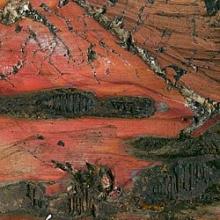
Experimental erotic short films DVD compilation. Printed at 500 copies, including 40 metallic special edition.
Precio:
15.00 USDCategoría:



Páginas
|
Esta página web no es una tienda. Las publicaciones aquí listadas lo son únicamente para información y referencia. Cuando la publicación sea de distribución limitada se incluirán enlaces a puntos de venta. |


